

Gutter cleaning before fall in North Carolina is one of the simplest seasonal maintenance jobs a homeowner can plan before leaves, pine needles, heavy rain, and cooler weather begin putting more pressure on the roof-drainage system. Gutters may look like a small part of the exterior, but when they clog, water can overflow against fascia, siding, foundations, walkways, landscaping, and roof edges.
The best approach is preventive: inspect and clean the system before the heaviest debris buildup, then check it again after major leaf drop or severe weather. This guide explains when to clean, what warning signs to look for, how North Carolina trees affect gutter debris, and when a professional cleaning or repair makes more sense.
Why gutter cleaning before fall in North Carolina matters
North Carolina homes can collect several types of roof debris. Hardwood trees contribute leaves and small twigs, while pines can add needles and cones. NC State Extension notes that loblolly pine is widespread through the Piedmont and Coastal Plain, and its cones mature in early fall. Different neighborhoods therefore experience different combinations of leaves, pine straw, seed pods, small branches, and roof granules.
When this material forms a dam inside a gutter or at the downspout outlet, rainwater has fewer places to go. The result can be overflow over the front edge, water running behind the gutter, standing water, or downspouts that barely drain. That is why gutter cleaning before fall in North Carolina is less about appearance and more about controlling roof runoff.
North Carolina emergency-preparedness guidance also treats clear drainage as part of storm readiness. The North Carolina Department of Insurance recommends clearing debris from gutters and downspouts before storms, and ReadyNC similarly advises homeowners to clear clogged rain gutters and downspouts when securing property.

When should you clean gutters before fall?
There is no single calendar date that works for every North Carolina property. Elevation, tree species, shade, storms, and the number of mature trees around the home all affect debris buildup. A practical approach is to inspect gutters in late summer or early fall, clean obvious buildup before peak leaf drop, and then check the system again after most nearby leaves have fallen.
Homes surrounded by mature trees may need more frequent attention. A property with few trees may need far less. The goal is not to follow an arbitrary schedule; it is to keep gutters and downspouts open before prolonged rainfall or storm events.
If you are already preparing for tropical weather, connect this maintenance with our hurricane preparation in North Carolina guide. Clean drainage, roof checks, and securing exterior hazards work best when handled before bad weather is close.
9 signs your gutters need attention before fall
1. Leaves or pine needles are visible above the gutter line
If debris is visible from the ground, there is often more material inside the trough than you can see. A few loose leaves are not automatically a problem, but packed leaves and pine straw can hold moisture and slow drainage.
2. Water spills over the front edge during rain
Overflow is one of the clearest signs that water cannot move through the gutter and downspout fast enough. A clog is common, but overflow can also result from poor pitch, loose hangers, undersized gutters, or a downspout problem.
3. Downspouts drain slowly or not at all
A gutter can look clean while the downspout is blocked. Leaves often collect at outlets and elbows. If water backs up near the outlet or very little reaches the bottom of the downspout during rain, the blockage may be lower in the system.
4. Plants are growing in the gutter
Seeds can take root in decomposed leaf material. If grass or small plants are growing from the gutter, the system has been holding organic debris long enough to create a miniature planting bed. That is a strong signal that cleaning is overdue.
5. The gutter is sagging or pulling away from fascia
Wet debris and standing water add weight. Sagging can also come from loose or damaged hangers, deteriorated fascia, or previous storm damage. Cleaning is important, but structural problems should be repaired rather than simply emptied and ignored.
6. Water stains appear on fascia or siding
Dark streaks, peeling paint, staining, or moisture marks near the roof edge can indicate repeated overflow or water moving behind the gutter. The source should be investigated before the condition worsens.
7. Puddles form near the foundation
Gutters are only part of the drainage path. Downspouts need to discharge water where it can move away from the structure. If runoff repeatedly collects against the foundation, inspect the downspout outlet, extensions, grading, and nearby drainage conditions.
8. You find roof granules inside the gutter
A small amount of granule loss can occur as asphalt shingles age. Larger or sudden accumulations can justify a closer roof look, especially after hail or strong wind. If the change followed severe weather, review our guide to roof storm damage in North Carolina.
9. It has been a long time since anyone checked the system
If you cannot remember the last inspection, gutter cleaning before fall in North Carolina is a good opportunity to establish a baseline. Once the system is clean, future checks are easier because you know what normal drainage looks like.
A safe gutter-cleaning checklist
For a simple one-story home where safe ladder access is possible, the cleaning process is straightforward. The important part is avoiding shortcuts that increase fall risk or damage the gutter.
- Choose a dry day with calm weather.
- Use a stable ladder on firm, level ground.
- Keep three points of contact while climbing.
- Wear gloves and eye protection.
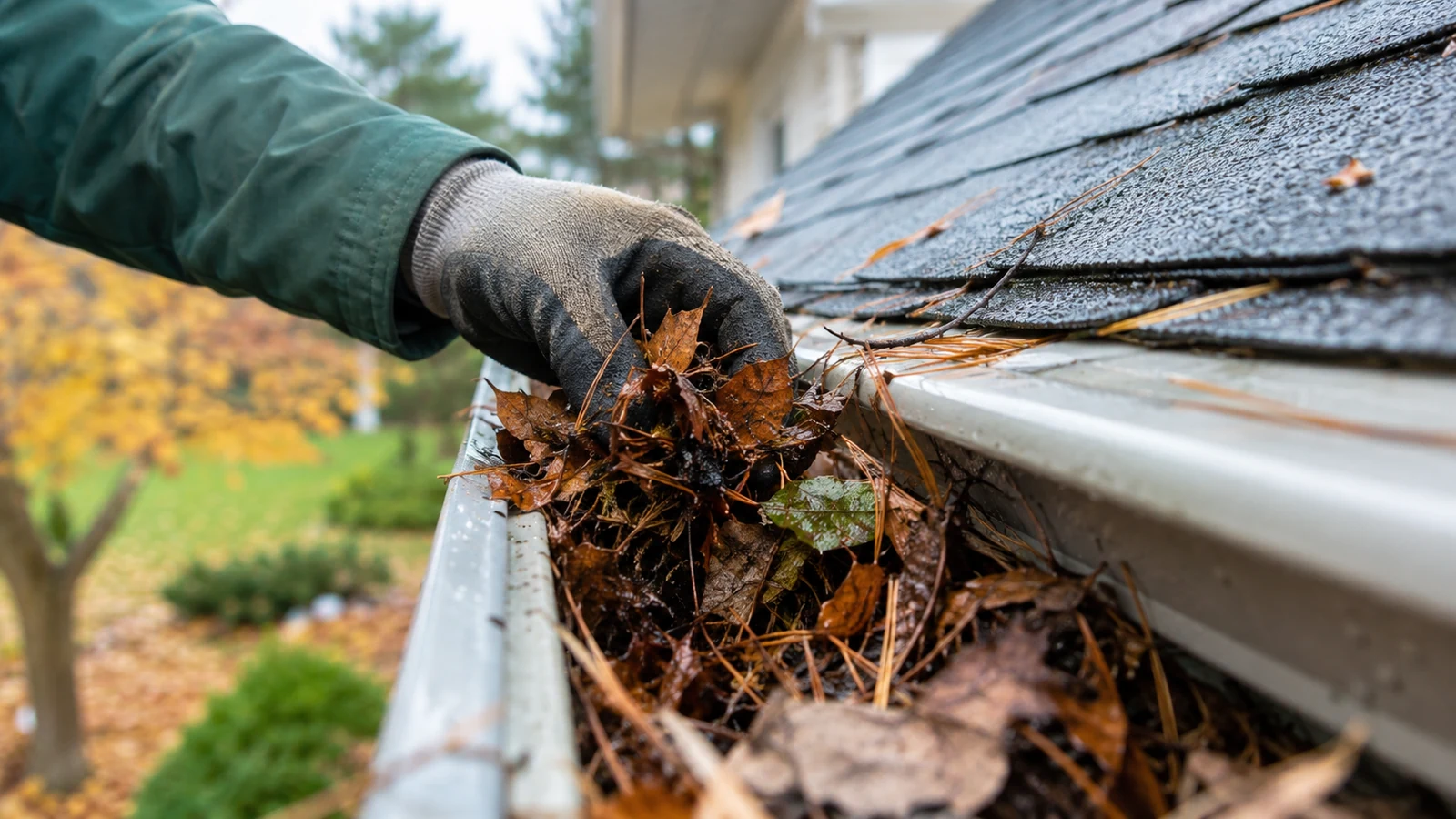
- Remove loose leaves, pine needles, twigs, and packed organic debris.
- Clear the area around downspout outlets.
- Flush small amounts of water through the system to confirm drainage when appropriate.
- Look for loose hangers, separated seams, leaking corners, sagging sections, damaged fascia, and disconnected downspouts.
- Confirm that water discharges away from the foundation where practical.
Do not lean far sideways from a ladder to reach another section. Move the ladder instead. Do not walk a wet or steep roof to make gutter cleaning faster. Safety matters more than completing the job in one trip.
What a professional gutter cleaning should include
For homeowners who prefer professional gutter cleaning before fall in North Carolina, the service should do more than remove the debris you can see from the driveway. The contractor should clear the gutter channels, verify downspout flow, and identify obvious problems discovered during the cleaning. Depending on the company and scope, this may include photographs of problem areas and recommendations for repairs.
Ask whether cleanup and removal of gutter debris are included. Also ask what happens if the crew finds loose gutters, rotted fascia, damaged downspouts, or roof-edge problems. Clear scope makes it easier to compare estimates.
If you need help, browse the NC Homeowners Guide contractor directory or request gutter quotes from local professionals.
Should you clean gutters once or twice during fall?
It depends on the property. Some homes benefit from an early cleaning before heavy leaf drop and a second cleaning after most leaves are down. Other homes may stay clear with one well-timed service. Properties under pines or large deciduous trees often need more frequent checks than open lots.
The key is to inspect rather than assume. If a major wind event drops a large amount of debris, or a storm is approaching, check the system again even if it was recently cleaned.
Gutter cleaning before fall in North Carolina works best as part of a broader seasonal routine that includes checking roof edges, downspout connections, exterior drainage, trees near the home, and any previous leak locations.
What about gutter guards?
Gutter guards can reduce the amount of larger debris entering the gutter, but no system makes roof drainage completely maintenance-free. Fine material, pine needles, roof granules, seeds, and debris can still collect on top of or around some guard systems.
If your home has guards, inspect them before fall for loose sections, buildup at valleys, debris collecting along roof edges, and blocked downspout outlets. Cleaning frequency may be lower, but inspection is still important.
When cleaning is not enough
A gutter that repeatedly overflows after cleaning may have another problem. Common possibilities include insufficient slope, too few downspouts, poor outlet placement, damaged sections, loose hangers, or gutters that are too small for the roof and rainfall conditions.
Water leaking behind the gutter can also involve drip edge, fascia, roof-edge installation, or attachment issues. In these situations, paying for repeated cleaning without correcting the underlying problem may not solve anything.
If the system is damaged or repeatedly fails during rain, request an inspection and written scope. You can use our gutter estimate request to compare local options.
North Carolina trees and the debris they create
The mix of debris around a house depends heavily on the landscape. NC State Extension’s guide to common North Carolina trees describes many hardwood and pine species found across the state. That matters for gutters because broad leaves, needles, cones, seed material, and small twigs behave differently inside a drainage system.
Pine needles can interlock and create dense mats around outlets. Broad leaves can cover an opening quickly when wet. Small twigs can bridge across a downspout opening and catch additional debris. Understanding what falls around your property helps you decide how often to inspect.
Frequently asked questions about gutter cleaning before fall in North Carolina
Is late summer too early to clean gutters?
No. An early inspection can remove debris that has accumulated through spring and summer and gives you time to repair problems before heavier fall leaf drop. You may still need another check later depending on nearby trees.
Can clogged gutters damage fascia?
Repeated moisture and overflow can contribute to deterioration around fascia and roof edges, especially when wood is already exposed or damaged. Cleaning the gutter is important, but damaged fascia should also be evaluated.
Should downspouts be cleaned too?
Yes. A clean gutter cannot work correctly if the downspout or outlet is blocked. The entire drainage path should be checked.
How often should North Carolina gutters be cleaned?
There is no universal schedule for gutter cleaning before fall in North Carolina. Homes with heavy tree coverage may need multiple checks per year, while open properties may need less. Inspection after major storms and before heavy seasonal debris is more useful than relying only on a fixed calendar.
Do gutter guards eliminate fall cleaning?
No. They can reduce larger debris entering the gutter, but they still need periodic inspection and may require surface cleaning or maintenance depending on the system and nearby trees.
Is gutter cleaning before fall in North Carolina worth doing if my gutters look clear?
Yes, an inspection is still useful because blockages can occur inside downspouts or at outlets where they are not visible from the ground. If water flows correctly and the system is structurally sound, the inspection may be all you need.
Bottom line for North Carolina homeowners
Gutter cleaning before fall in North Carolina is inexpensive preventive maintenance compared with dealing with repeated overflow, damaged fascia, foundation drainage problems, or emergency cleaning during bad weather. The right timing depends on your trees and property, but the principle is simple: inspect early, keep the drainage path open, and check again when storms or heavy leaf drop add new debris.
For more seasonal maintenance information, visit the NC Homeowners Guide blog. If your gutters need professional cleaning, repair, or replacement, compare contractors before the next heavy rain arrives.
Need help with gutters before fall?
Compare North Carolina gutter professionals and request estimates for cleaning, repair, or replacement.