
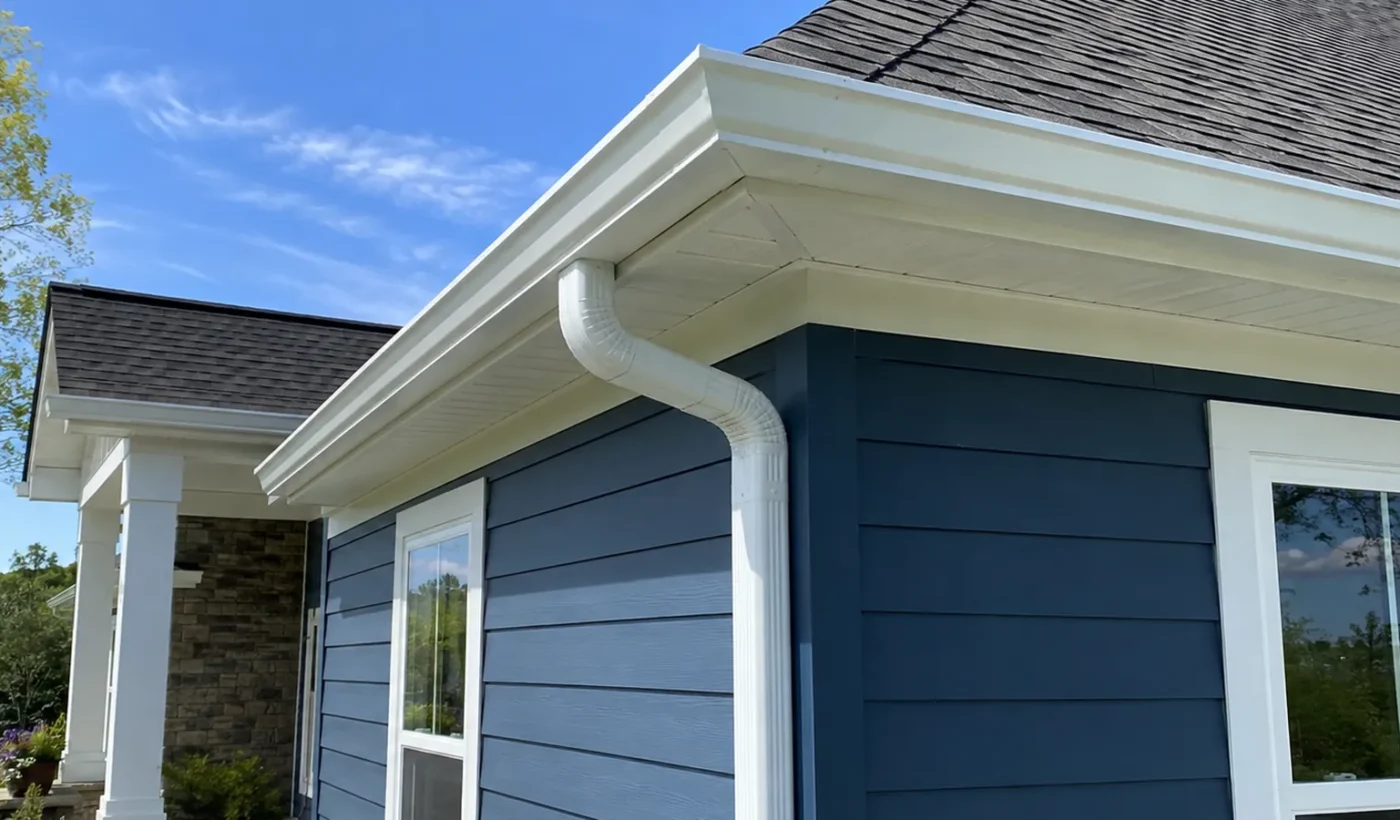
5 inch vs 6 inch gutters in north carolina — Choosing 5 inch vs 6 inch gutters in North Carolina usually comes down to roof area, pitch, rainfall handling, downspout capacity and the home’s drainage layout.
How to compare 5 inch vs 6 inch gutters in North Carolina
Choosing between 5-inch and 6-inch gutters is not simply a question of buying the larger option. The right size depends on roof area, pitch, valley concentration, outlet design, downspout capacity and the way water is discharged around the property.
Five-inch K-style gutters are common on many residential homes. Six-inch gutters provide greater carrying capacity and are frequently paired with 3×4 downspouts. A contractor should be able to explain why one system fits the roof better.
How 5-inch and 6-inch gutters differ
The visible difference is only about an inch at the gutter profile, but the capacity difference can be meaningful. The larger trough can accept more roof runoff before reaching the top edge, provided the outlets and downspouts can move that water away.
When 5-inch gutters make sense
A properly designed 5-inch system can work well on smaller or simpler roof planes where runoff is distributed and outlet placement is adequate. Homeowners should not assume that every 5-inch system is undersized simply because 6-inch gutters exist.
When 6-inch gutters may be worth considering
Larger roofs, steep pitches, long runs and valleys that dump concentrated water into one section can benefit from more capacity. Six-inch systems are also useful when the design includes larger outlets and 3×4 downspouts.
Do not forget the downspouts
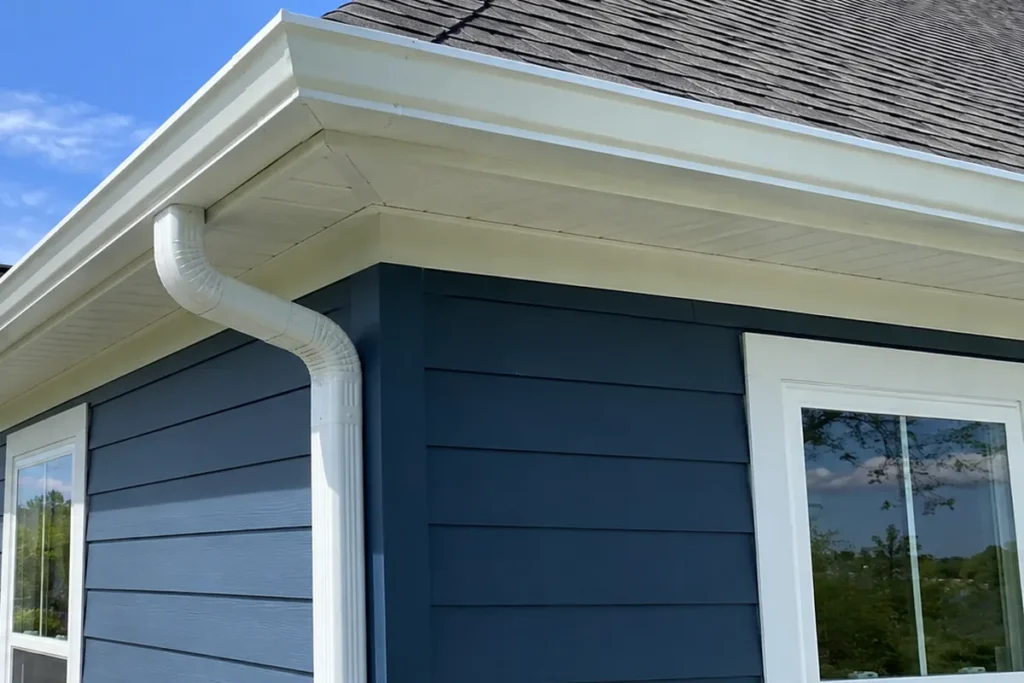
A larger gutter without adequate outlets can still overflow. Compare the number and size of downspouts, where they are placed and whether they discharge far enough from the foundation.
Cost differences
Six-inch systems normally use more material and may carry a higher installed price, but the difference should be evaluated against the complete scope. Compare footage, downspouts, removal, accessories, wood repair and warranty before focusing on the gutter size alone.
North Carolina rain, trees and maintenance
Heavy summer storms and tree debris make maintenance important. Neither gutter size eliminates the need for sensible downspout placement and periodic inspection. Guards may reduce certain debris but should be chosen for the property rather than as a substitute for drainage design.
Questions to ask before choosing a size
- What roof areas drain into each gutter run?
- Are there valleys concentrating water?
- What downspout size is included?
- How many outlets will the run have?
- Where will each downspout discharge?
- Is fascia condition suitable for the system?
- What material specification and warranty are included?
Frequently asked questions
Is a 6-inch gutter always better?
No. It offers more capacity, but a properly designed 5-inch system can be appropriate on many homes. The whole drainage design matters.
Can I use 6-inch gutters with small downspouts?
It is physically possible in some designs, but the outlet and downspout capacity should match the goal of the larger gutter. Ask the contractor to explain the complete system.
Do 6-inch gutters look too large?
On many modern homes they blend into the roof edge well. Appearance is subjective, so ask to see installed examples if aesthetics are important.
Roof area matters more than house square footage
Homeowners sometimes compare gutter size using the heated square footage of the house, but gutters collect water from the roof surface. A compact two-story home can have a different roof-drainage pattern than a wide one-story home with the same interior square footage. Roof planes, pitch and valleys determine where the water actually arrives.
Valleys can overwhelm a small section
A roof valley combines runoff from two roof planes and can send a concentrated stream into a relatively short gutter area. Even when the total gutter length is reasonable, that one location may need more capacity, better outlet placement or a splash-control detail. Ask the installer to point out the highest-flow areas.
5-inch vs. 6-inch downspout pairing
Many 5-inch systems use 2×3 downspouts, while many 6-inch systems use 3×4 downspouts. There is no rule that every system must use one exact pairing, but the outlet and downspout capacity should support the gutter size. A 6-inch gutter does not provide its full benefit if the water cannot leave quickly enough.
Appearance and curb appeal
Six-inch gutters are larger, but on many modern homes the difference is subtle from the ground. Color, fascia depth, roof edge and downspout placement usually have as much visual impact as the nominal gutter size. If appearance matters, ask to see photos of both sizes on homes with a similar style.
Maintenance differences
Larger gutters and downspouts can handle more volume and may pass some debris more easily, but both sizes still need inspection. Leaves, pine needles, roof granules and small branches can block outlets. If guards are being considered, evaluate the guard together with the gutter and downspout design.
How to compare two gutter-size quotes
When one contractor recommends 5-inch and another recommends 6-inch, ask each to explain the roof conditions behind the recommendation. Compare the number of downspouts, outlet size, material specification, hanger spacing, corners, removal, fascia repair policy and warranty. That discussion is more useful than assuming the larger system is automatically the better quote.
North Carolina homeowner checklist
- Identify the largest roof planes and valleys
- Confirm the proposed gutter size
- Confirm downspout size and quantity
- Ask where each downspout discharges
- Compare material and installation details
- Review guard options separately
- Check the workmanship warranty
See the North Carolina gutter cost guide for broader pricing and scope factors.