
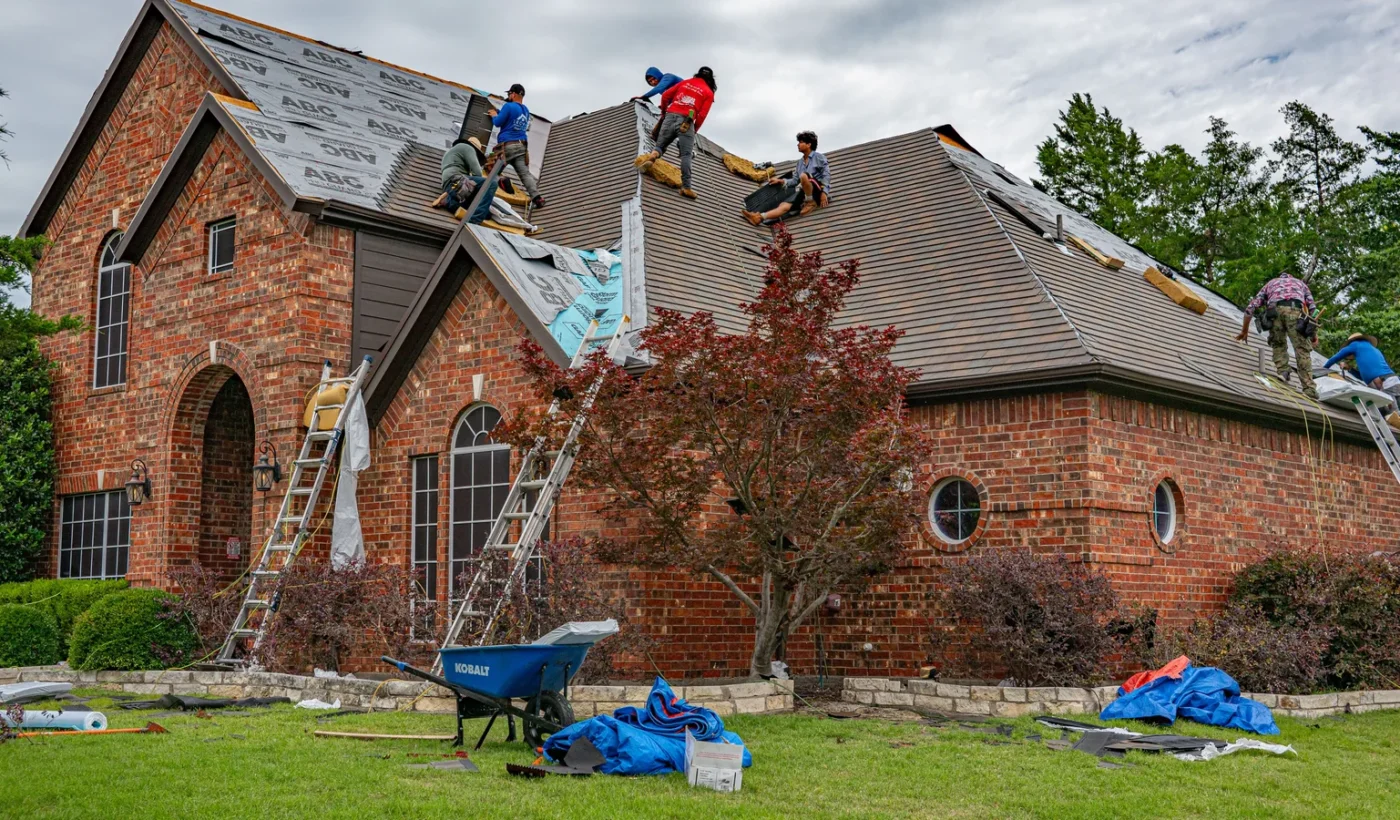
Severe thunderstorms, hail, straight-line winds, tropical systems, and falling tree limbs can all leave a roof vulnerable. The challenge for homeowners is that roof storm damage in North Carolina is not always dramatic or easy to see from the yard. A roof can look mostly normal while individual shingles, flashing, vents, or underlayment have been compromised.
This guide explains what North Carolina homeowners can safely look for after a storm, which warning signs deserve faster attention, how to document possible damage, and when a professional roof inspection makes sense.
What counts as roof storm damage?
Storm damage is physical damage caused by weather events such as wind, hail, heavy rain, airborne debris, or fallen branches. The most common problems on asphalt-shingle roofs include lifted or missing shingles, creased tabs, punctures, bruising from hail, exposed fasteners, damaged flashing, and leaks that begin after the storm.
Damage can also occur around roof penetrations and edges. Plumbing vents, ridge vents, pipe boots, skylights, chimneys, drip edge, valleys, and flashing should all be considered when a new leak or visible change appears after severe weather. Because roof storm damage in North Carolina can be subtle, comparing several warning signs is more useful than relying on a single mark or stain.
7 signs of roof storm damage in North Carolina homeowners should check
1. Missing, lifted, or displaced shingles
Strong wind can loosen shingles or pull them completely away. From the ground, look for areas where the roof color or pattern suddenly changes. A lifted shingle may settle back down after the wind stops, so not every problem is obvious without closer inspection.
2. Creased or torn shingle tabs
Wind can bend a shingle upward and create a crease. Even if the shingle remains attached, the seal or reinforcing mat can be weakened. Creased shingles are especially important to document if they appeared immediately after a wind event.
3. Hail impact marks and granule loss
Hail can knock protective granules from asphalt shingles and, in stronger impacts, bruise or fracture the material below the surface. Granules in gutters or near downspout discharge points can be a clue, although normal aging also causes granule loss. The pattern, freshness, and surrounding storm evidence matter.

4. Dented gutters, downspouts, vents, or metal flashing
Metal components can provide useful evidence after hail or wind-driven debris. Check gutters, downspouts, roof vents, flashing, and other exposed metal for new dents or impact marks. Damage to gutters does not automatically mean the roof is damaged, but it can support the need for a closer inspection when evaluating roof storm damage in North Carolina.
5. Water stains, ceiling spots, or attic moisture
After heavy rain, look inside the home for new ceiling stains, damp drywall, peeling paint, or musty odors. If you can safely access the attic, check for wet decking, darkened wood, active drips, or damp insulation. A small roof opening can sometimes create damage far from the original entry point because water travels along framing.
6. Damaged flashing around chimneys and roof transitions
Flashing helps move water away from roof intersections and penetrations. Storms can loosen metal flashing, sealants, or adjacent shingles. Pay attention to chimneys, sidewalls, valleys, skylights, and roof-to-wall transitions if a leak starts after a storm.
7. Tree limbs or debris on the roof
A fallen branch can break shingles, puncture decking, bend gutters, or damage structural components. If a large limb is resting on the roof, stay out of the affected area of the home until you know the structure is safe.
What to do immediately after a North Carolina storm
Start with safety and documentation. Take wide photos of each side of the home and closer photos of anything you can see safely from the ground. Photograph damaged gutters, siding, windows, fences, trees, and outdoor equipment too. When documenting roof storm damage in North Carolina, these details can help establish the overall storm pattern.
The North Carolina Department of Insurance advises homeowners to photograph damage before temporary repairs, protect the property from further damage, keep receipts, and contact the insurance company or agent promptly when making a claim.
Make only necessary temporary repairs
If water is actively entering the home and it is safe to do so, reasonable temporary measures may help prevent additional damage. This can include collecting water indoors or having a qualified professional install temporary protection. Avoid permanent repairs until you understand the damage and, when insurance is involved, until you have coordinated with the carrier.
Save photos, receipts, and storm information
Create one folder on your phone or computer for before-and-after photos, contractor inspection notes, receipts for temporary protection, and communication with your insurance company. Good organization is useful even when the damage turns out to be minor.
Should you call a roofer or your insurance company first?
If you believe the storm caused damage that may lead to an insurance claim, review your policy and contact your insurance company or agent. Coverage and deductibles vary. The NC Department of Insurance windstorm and hail guidance explains that wind and hail coverage can differ depending on the policy and location.
You can also choose a roofing contractor to inspect the roof and explain visible conditions. Be cautious with anyone who appears uninvited after a storm and pressures you to sign immediately. North Carolina regulators specifically warn consumers about high-pressure roofing scams. See the state’s roofing scam guidance.

When a professional roof inspection is worth it
Consider a professional inspection when you have missing shingles, suspected hail damage, new interior water stains, damaged flashing, fallen debris, or a roof that was directly exposed to severe wind. An inspection is also reasonable when neighboring homes have confirmed storm damage but yours looks normal from the ground.
A good inspection should distinguish visible storm-related conditions from normal wear, maintenance issues, and older damage. A professional evaluation can help separate roof storm damage in North Carolina from ordinary aging. Ask for photographs and a written explanation of what was observed. Avoid treating a quick sales pitch as a technical inspection.
If you are ready to compare local professionals, browse the NC Homeowners Guide contractor directory. You can also request roofing quotes or visit the homeowner blog for more North Carolina maintenance guides.
Roof storm damage vs. normal roof aging
Normal aging tends to be gradual. Shingles may lose granules, edges may curl, sealants may dry out, and colors may fade over time. Storm damage is more likely to appear suddenly and may follow a directional pattern associated with wind or impact.
That distinction matters because not every worn roof is storm damaged, and not every storm-damaged roof needs total replacement. The NC Department of Insurance notes that coverage depends on direct physical damage and the specific policy terms. Homeowners should rely on documented conditions rather than assumptions.
Common North Carolina storm-damage questions
Can hail damage a roof without causing an immediate leak?
Yes. Hail can damage shingle surfaces or underlying material without producing an immediate visible leak. That is one reason documentation and inspection can be useful after a significant hail event.
Do a few missing shingles mean the whole roof needs replacement?
Not automatically. The correct repair scope depends on the location and extent of damage, roof condition, material availability, installation details, and other factors. An inspection should identify what is actually damaged before a repair decision is made.
Should I climb onto the roof to check for hail marks?
No. Walking on a storm-damaged roof can be unsafe and may cause additional damage. Start from the ground and interior of the home, then use a qualified professional when a rooftop inspection is necessary.
Can roof storm damage in North Carolina cause a leak days later?
Document the leak as soon as you notice it, take reasonable steps to limit additional damage, and contact the appropriate professional or insurance representative based on your situation. Keep records of when the leak appeared and any temporary work performed.
Does homeowners insurance always cover wind and hail in North Carolina?
No. Policies and deductibles vary, and some properties may have separate or excluded windstorm or hail coverage. When roof storm damage in North Carolina is involved, review your declarations and policy documents and contact your insurer or agent for information specific to your coverage.
Bottom line for North Carolina homeowners
After severe weather, focus on three things: safety, documentation, and a careful inspection when warning signs are present. Missing or creased shingles, fresh hail marks, damaged metal components, new leaks, flashing problems, and fallen debris all deserve attention.
If you suspect roof storm damage in North Carolina, do not let urgency push you into an uninformed decision. Photograph what you can safely see, protect the home from further damage, review your insurance responsibilities, and choose qualified professionals carefully.
Need help finding a roofing professional?
Use NC Homeowners Guide to compare local contractors and request estimates for your property.