
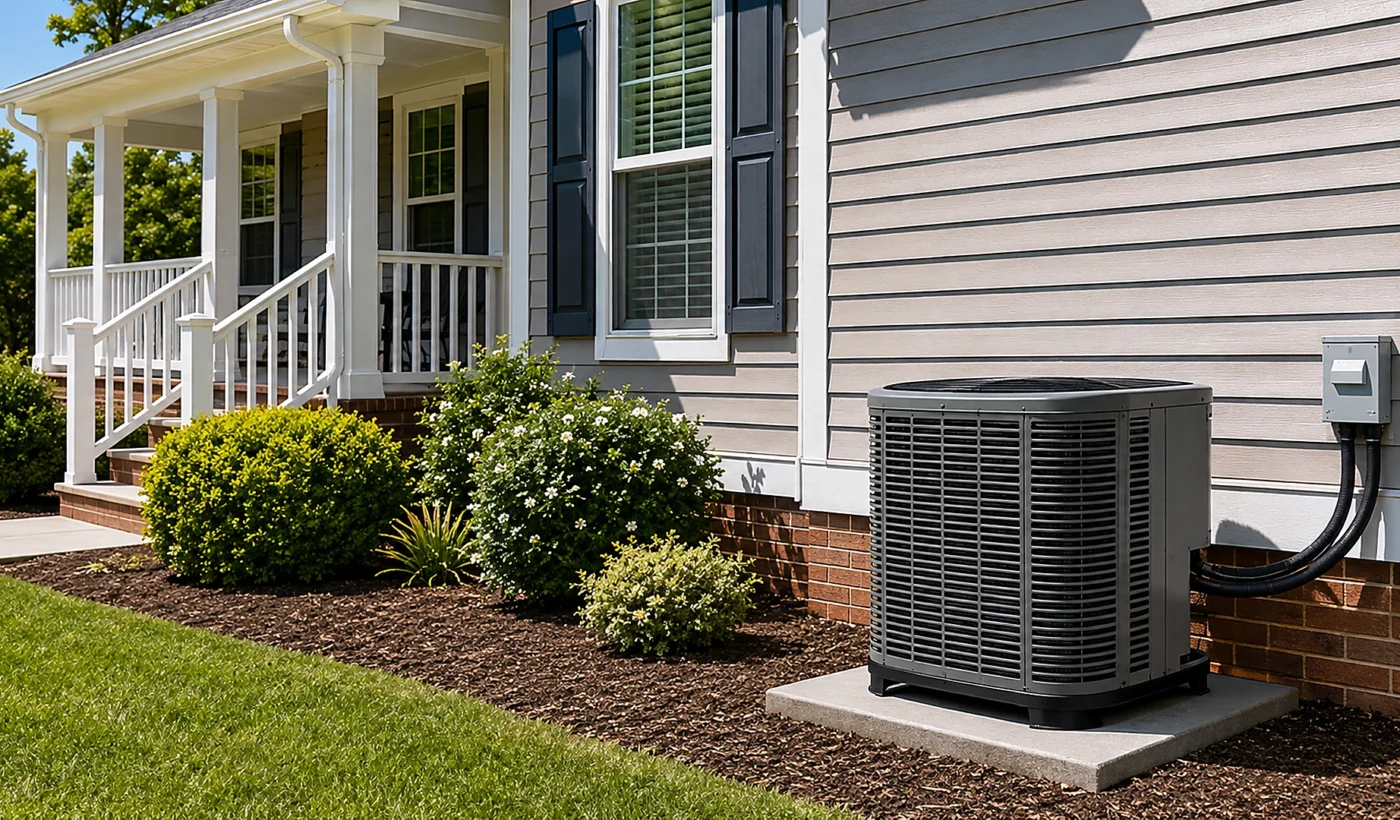
HVAC replacement cost in Durham, NC typically falls around $6,000 to $14,500 in 2026 for a professionally installed residential system. A central air-conditioning replacement may cost about $5,500 to $11,500, a ducted heat pump about $6,000 to $13,000, and a combined AC plus gas-furnace replacement roughly $8,500 to $14,500 or more.
The final price depends on system type, capacity, efficiency, ductwork condition, electrical needs, equipment location, and whether the installation requires upgrades beyond a straightforward equipment swap.
This Durham-specific guide explains the major cost differences so homeowners can compare HVAC proposals based on scope and equipment—not just the lowest number on the page.
HVAC Replacement Cost in Durham: What Homeowners Pay in 2026
A practical planning range for HVAC replacement cost in Durham is approximately $6,000 to $14,500 for many complete residential replacements.
That range covers several very different projects. One homeowner may be replacing only a central AC system. Another may need a new heat pump and air handler. A third may be replacing an outdoor condenser, evaporator coil, and gas furnace together.
Because the equipment configuration matters so much, the first step in comparing prices is identifying what is actually being replaced.
| Durham HVAC Project | 2026 Planning Range |
|---|---|
| Central AC replacement | $5,500–$11,500 |
| Ducted heat-pump replacement | $6,000–$13,000 |
| AC + gas furnace replacement | $8,500–$14,500+ |
| Gas furnace only | $3,200–$7,000 |
| Ductless mini-split system | $3,000–$10,000+ |
| Major ductwork replacement | Add roughly $2,000–$5,000+ |
These are planning ranges rather than guaranteed quotes. A contractor still needs to inspect the home, verify the equipment configuration, evaluate airflow, and determine what installation work is required.
Heat Pump or AC + Furnace? The System Type Changes the Price
One of the biggest reasons HVAC replacement cost varies in Durham is that homes do not all use the same heating and cooling setup.
Ducted Heat Pump
A heat pump provides heating and cooling through the same refrigeration system. Many homes in the Triangle already use heat pumps, so replacing an existing heat pump can be relatively straightforward when the ductwork, refrigerant lines, electrical service, and equipment locations remain suitable.
A practical 2026 planning range for a conventional ducted heat-pump replacement is about $6,000 to $13,000.
Costs can move higher with premium variable-speed equipment, electrical upgrades, a new air handler, new refrigerant lines, difficult attic access, or significant duct modifications.
Central AC Plus Gas Furnace
Some Durham homes use central air conditioning for cooling and a gas furnace for heating. When both are replaced together, homeowners can often expect approximately $8,500 to $14,500 or more.
The total depends on the efficiency and capacity of both pieces of equipment and whether gas piping, venting, electrical connections, the indoor coil, thermostat, condensate drainage, or duct transitions need to change.
If only one component has failed, ask how a partial replacement will match the remaining equipment before approving the work.
How System Size and Tonnage Affect HVAC Replacement Cost
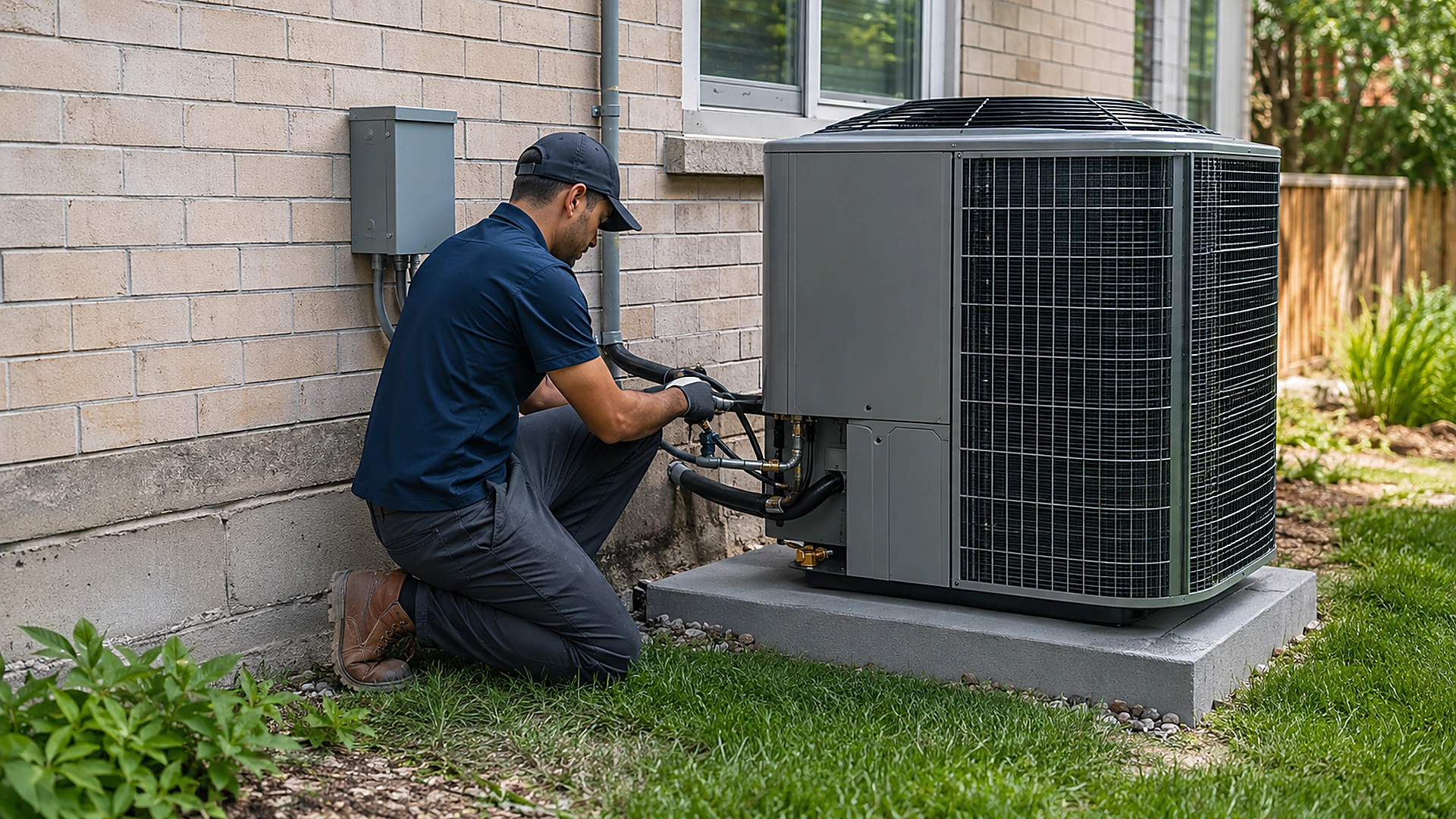
Residential cooling capacity is commonly discussed in tons. Many systems fall somewhere between about 1.5 and 5 tons, but installing the largest unit that fits the budget is not a smart sizing strategy.
A larger system usually costs more, and oversizing can create comfort problems. An oversized air conditioner or heat pump may cool the house quickly but shut off before it has enough runtime to remove moisture effectively during humid North Carolina weather.
An undersized system can struggle to maintain the desired indoor temperature during the hottest or coldest conditions.
The right capacity should be based on the home’s actual heating and cooling load rather than a simple rule of thumb.
Why Square Footage Alone Is Not Enough
Two Durham homes with the same 2,000 square feet can require different HVAC capacities.
Factors that influence the heating and cooling load include:
- Insulation levels
- Window quantity and efficiency
- Orientation and solar exposure
- Ceiling height
- Air leakage
- Number of stories
- Crawlspace or basement conditions
- Duct location
- Shading
- Building-envelope improvements
A professional contractor should evaluate the home instead of automatically installing the same tonnage as the old system. The previous equipment may have been oversized or undersized from the beginning.
SEER2 Efficiency and the Upfront Price
When homeowners compare new cooling equipment, they will encounter SEER2 efficiency ratings. Higher-efficiency equipment generally costs more upfront, but the most expensive efficiency tier is not automatically the best choice for every Durham property.
Ask each contractor to identify:
- Exact model numbers
- System capacity
- SEER2 rating
- Heating efficiency information for heat pumps
- Whether indoor and outdoor equipment are properly matched
- The installed price difference between efficiency levels
Variable-speed and multi-stage systems may also increase HVAC replacement cost, but they can offer improvements in sound levels, humidity control, and part-load comfort. The useful question is what the additional price buys in the specific home.
Older Durham Homes Can Make HVAC Replacement More Complicated
Durham has a wide mix of housing ages and construction styles. Newer subdivisions may have relatively modern duct layouts, while older homes in established neighborhoods can present a very different installation environment.
Potential issues in older homes include:
- Undersized return ducts
- Leaky or disconnected duct joints
- Older flex duct
- Damaged duct insulation
- Limited attic access
- Tight crawlspaces
- Previous additions with improvised duct runs
- Aging electrical circuits
- Poor condensate drainage
This matters because replacing equipment alone does not solve every comfort problem. If certain rooms have always been too warm or too cold, the duct system should be evaluated before a new unit is installed.
How Much Can Ductwork Add?
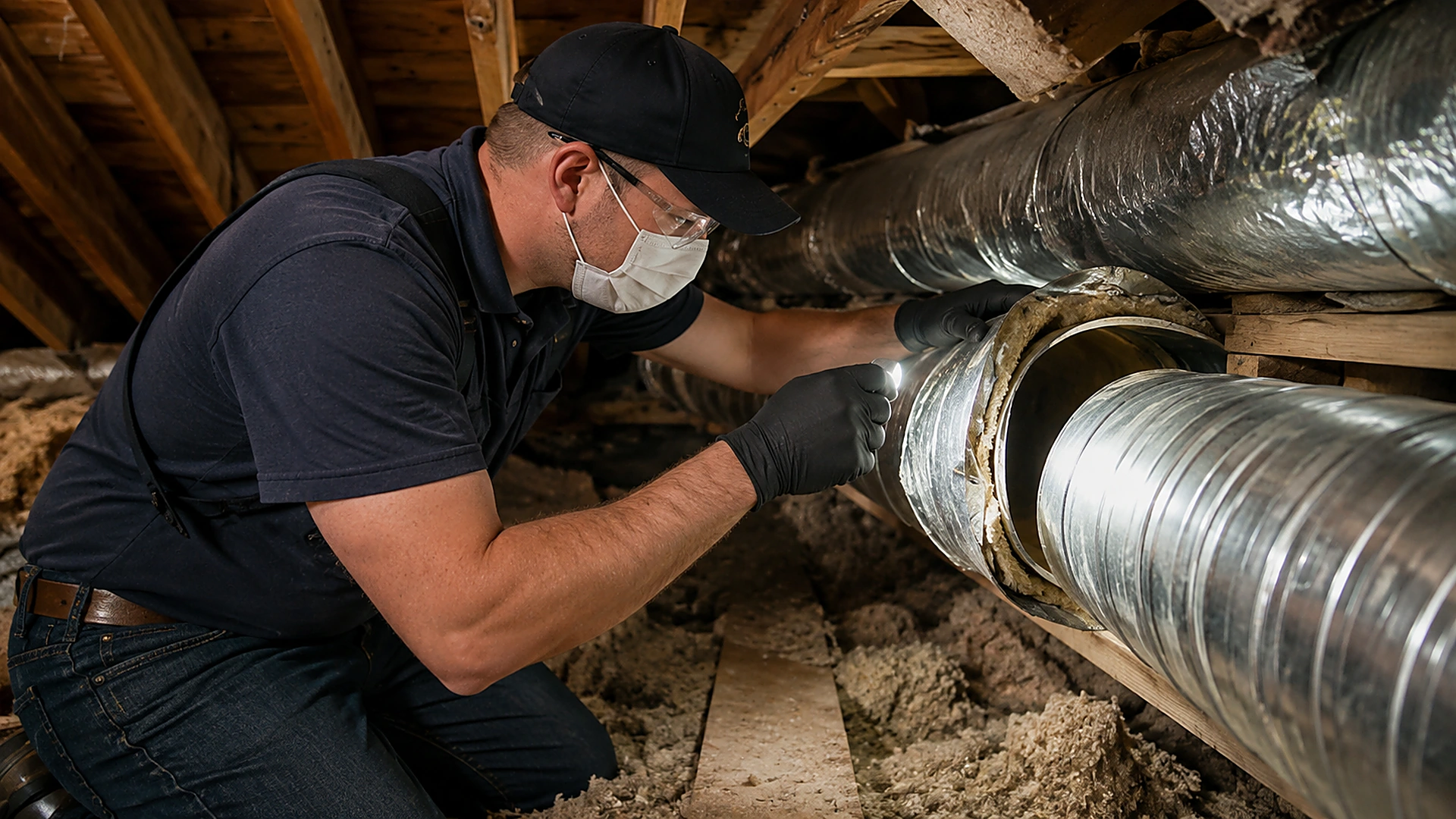
Existing ductwork is one of the largest variables that can move HVAC replacement cost beyond the basic equipment price.
A straightforward replacement may reuse the existing ducts. A home needing major duct replacement can add roughly $2,000 to $5,000 or more, depending on accessibility, the number of supply runs, return-air design, insulation requirements, and whether the work is in an attic or crawlspace.
Not every older duct system needs complete replacement. A contractor may recommend a smaller scope such as:
- Repairing disconnected sections
- Sealing accessible leaks
- Improving return-air capacity
- Replacing crushed or deteriorated flex duct
- Correcting poorly routed runs
- Adding or repairing duct insulation
Ask the contractor to separate required duct corrections from optional upgrades so the quote is easy to understand.
Electrical and Thermostat Changes Can Affect the Final Price
Heat pumps, condensers, air handlers, furnaces, thermostats, and accessory equipment all have electrical requirements.
A simple replacement may reuse existing circuits and disconnects. Other projects can require a new disconnect, breaker changes, circuit wiring, thermostat cable, condensate safety controls, or electrical work associated with auxiliary heat.
Converting from one type of heating system to another can involve more electrical work than a like-for-like replacement.
If an electrical upgrade is required, the HVAC proposal should clearly state whether it is included or will be handled separately.
Equipment Location and Access Matter
An air handler in a spacious utility room is easier to replace than equipment located deep inside a low attic or tight crawlspace.
Installation labor can increase when technicians must work around narrow attic openings, low framing, finished spaces, fences, landscaping, or equipment located far from convenient access.
Relocating equipment can add significantly more work because refrigerant lines, drains, ducts, electrical connections, and sometimes gas or venting systems also have to move.
Before accepting a quote, confirm whether the price assumes the replacement equipment will remain in the existing location.
Durham HVAC Permit Requirements and Published Fees
HVAC replacement is regulated mechanical work in Durham. The Durham City-County Building & Safety Department publishes mechanical permit fees for residential heating and cooling work.
The current published schedule lists $65 for replacement or conversion of a residential heating/cooling system with one inspection, along with additional fees for later inspections and other scopes of work when applicable.
Homeowners can confirm current requirements directly through the Durham City-County Building & Safety Department.
The permit cost is only a small portion of a full HVAC replacement cost, but permit and inspection responsibility should still be clearly stated in the proposal.
North Carolina HVAC Contractor Licensing
Heating and cooling contractors in North Carolina are regulated through the North Carolina State Board of Examiners of Plumbing, Heating and Fire Sprinkler Contractors.
For a major replacement, homeowners should verify that the contractor is properly licensed for the work being performed and ask for a written scope that identifies the equipment and installation responsibilities.
A lower equipment price can quickly lose its value if the system is improperly sized, poorly commissioned, or installed without correcting major airflow problems.
What Should an HVAC Replacement Quote Include?
A professional proposal should identify much more than the total price.
Look for:
- Manufacturer
- Exact model numbers
- Equipment capacity
- SEER2 rating
- Outdoor unit
- Indoor coil, furnace, or air handler
- Thermostat
- Refrigerant line-set treatment
- Disconnect and electrical connections
- Condensate drainage
- Equipment pad or mounting
- Duct transitions
- Required duct modifications
- Removal of existing equipment
- Refrigerant recovery
- Permit responsibility
- Startup and commissioning
- Manufacturer warranty
- Labor or workmanship warranty
If two estimates differ by several thousand dollars, compare these items line by line. One contractor may simply be replacing more of the system than another.
Repair or Replace the HVAC System?
A failed component does not automatically mean the entire HVAC system needs replacement.
Repair may still make sense when the equipment is otherwise in good condition, the failure is isolated, replacement parts remain available, and the repair cost is reasonable relative to the condition of the complete system.
Replacement becomes more attractive when repeated failures occur, the indoor and outdoor components are both aging, comfort has deteriorated, or the cost of maintaining the existing equipment continues to rise.
Useful questions include:
- What component failed?
- How much does the repair cost?
- What condition is the rest of the system in?
- Are the indoor and outdoor components similar in age?
- Has the system needed repeated repairs?
- Does it still control humidity and temperature well?
- Is the ductwork contributing to the problem?
Ask the technician to explain what failed and why repair is or is not practical instead of making the decision based only on equipment age.
How to Compare HVAC Replacement Cost Quotes in Durham
For a major HVAC project, comparing only the bottom-line number can be misleading.
Ask each contractor:
- What size system are you proposing?
- How was that size determined?
- Is this a heat pump or AC/furnace configuration?
- What are the exact model numbers?
- What is the SEER2 rating?
- Is the air handler, furnace, or indoor coil included?
- Will the existing refrigerant lines be reused?
- What duct modifications are included?
- Is electrical work included?
- Is the thermostat included?
- Who obtains the Durham mechanical permit?
- Is removal of the old equipment included?
- What startup and commissioning will be performed?
- What manufacturer warranty applies?
- What labor or workmanship warranty applies?
A $7,500 quote and a $10,000 quote may not describe the same installation. The details determine whether the comparison is meaningful.
Homeowners who want to organize multiple project options can also use the NC Homeowners Guide quote request.
Frequently Asked Questions About HVAC Replacement Cost in Durham
How much does HVAC replacement cost in Durham, NC?
A practical 2026 planning range is approximately $6,000 to $14,500 for many residential HVAC replacements. The final price depends heavily on system type, size, efficiency, ductwork, electrical requirements, and installation difficulty.
How much does a heat pump cost to replace in Durham?
A conventional ducted heat-pump replacement often falls around $6,000 to $13,000. Premium variable-speed equipment, electrical work, duct modifications, or difficult access can raise the price.
How much does central AC replacement cost in Durham?
For budgeting purposes, approximately $5,500 to $11,500 is a practical range for many central AC replacements. The indoor coil, capacity, efficiency, refrigerant-line work, and installation scope can change the final quote.
How much does replacing an AC and furnace together cost?
For a complete central AC and gas-furnace combination, homeowners can budget approximately $8,500 to $14,500 or more. Higher-end equipment and additional installation work can exceed that range.
Does new ductwork come with an HVAC replacement?
Usually not unless it is specifically included. Small transitions may be part of the equipment installation, while major duct replacement is normally a separate scope.
Do I need an HVAC permit in Durham?
Residential heating and cooling replacement is handled through Durham’s mechanical permitting and inspection system. Durham’s published schedule currently lists $65 for a residential replacement or conversion with one inspection.
Should I replace my HVAC with the same size system?
Not automatically. The existing equipment may not have been sized correctly, and changes to insulation, windows, additions, or the building envelope can affect the current load.
Is the cheapest HVAC quote usually the best value?
Not necessarily. Compare equipment model numbers, capacity, efficiency, ductwork, electrical scope, permit responsibility, commissioning, warranties, and exactly what equipment is being replaced.
Final Takeaway
For 2026 planning, HVAC replacement cost in Durham, NC is approximately $6,000 to $14,500 for many conventional residential projects.
Central AC replacement commonly falls near $5,500–$11,500, a ducted heat pump around $6,000–$13,000, and a combined AC plus gas-furnace replacement around $8,500–$14,500 or more.
The equipment price is only part of the project. Correct sizing, duct condition, efficiency, electrical requirements, access, refrigerant lines, permitting, installation quality, and commissioning all affect both upfront cost and long-term performance.
The best way to compare Durham HVAC proposals is to make sure each contractor is quoting the same equipment scope and installation work before deciding which price offers the best value.