
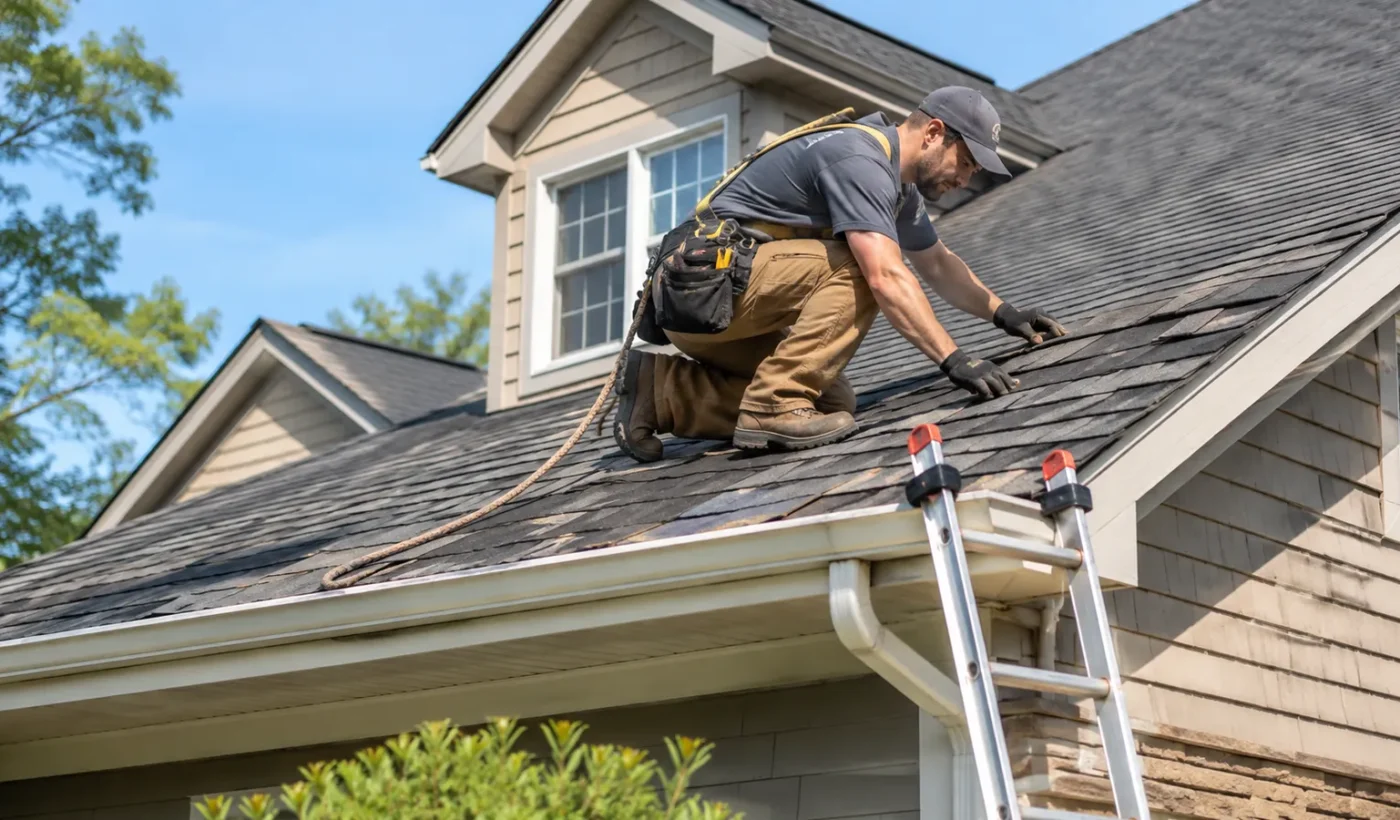
roof repair vs replacement in north carolina — Choosing roof repair vs replacement in North Carolina depends on roof age, the extent of damage, recurring leaks, decking condition, storm exposure and long-term plans.
How to decide between roof repair vs replacement in North Carolina
A roof problem does not automatically mean the entire roof needs to be replaced. The correct decision starts with identifying the cause, the extent of damage, the roof’s age and condition, and whether a repair can reasonably restore reliable performance.
A low repair quote is not valuable if it addresses the visible symptom but misses the water-entry point. A replacement quote is not automatically better just because it is more comprehensive. Ask for the diagnosis and scope in writing.
When roof repair may be reasonable
Localized wind damage, a small flashing problem, a limited leak around a penetration or a clearly isolated shingle issue may be repairable when the surrounding roof remains in serviceable condition.
When replacement deserves consideration
Widespread aging, recurring leaks, extensive shingle deterioration, large areas of storm damage or repeated repair history can make replacement more sensible. The contractor should explain what evidence supports that recommendation.
Age is only one factor
Roof age matters, but it should not be the only reason for a recommendation. Installation quality, ventilation, sun exposure, previous repairs and storm history all affect condition.
Flashing and water entry
Leaks near chimneys, walls, valleys and roof penetrations often involve flashing details. Water can travel before becoming visible inside the house, which is why the interior stain may not sit directly below the exterior defect.
Get the diagnosis in writing
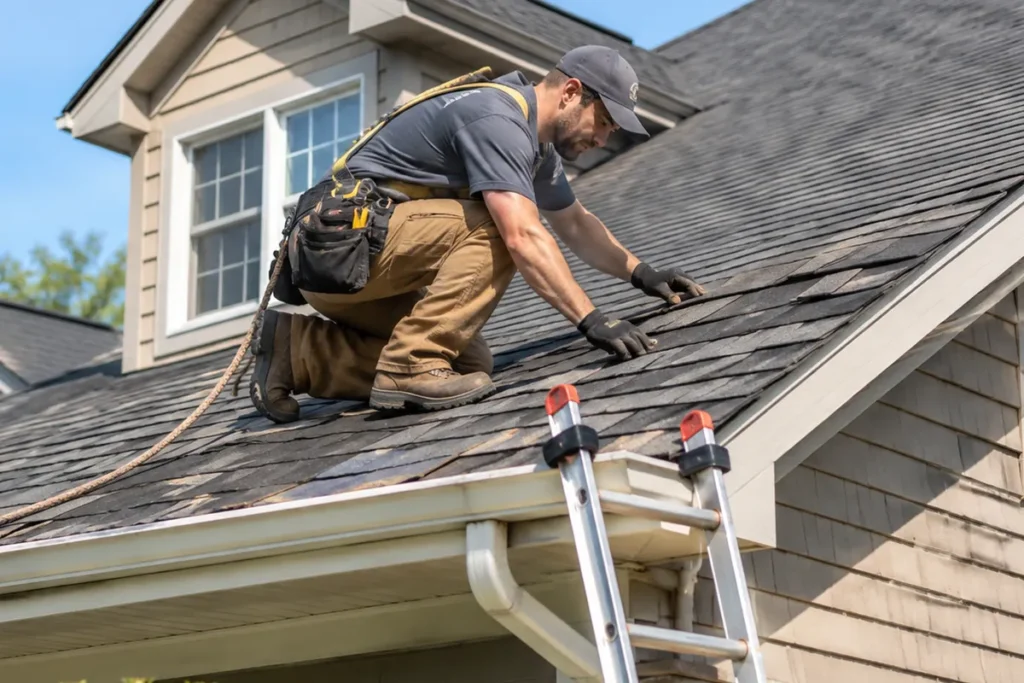
Ask the contractor to identify the suspected cause, the area being repaired, materials to be replaced, flashing work, cleanup and what happens if hidden deck damage is discovered. Photos can make the scope easier to understand.
Compare repair and replacement estimates
Do not compare only the totals. A replacement estimate should describe shingles, underlayment, flashing, ventilation, decking allowances, disposal and warranty. A repair estimate should clearly define the limits of the repaired area and what is not included.
Insurance and storm damage
If storm damage may be involved, document the condition and understand your policy before assuming coverage. Contractors can document physical conditions, but coverage decisions belong to the insurer.
Questions to ask a roofing contractor
- What is the source of the problem?
- Why is repair or replacement recommended?
- What flashing or decking work is included?
- How will hidden damage be handled?
- What manufacturer and workmanship warranties apply?
- Who is responsible for cleanup and magnetic nail collection?
Frequently asked questions
Can one leak mean I need a new roof?
Not necessarily. The cause and surrounding roof condition should be evaluated before making that decision.
Is roof repair cheaper than replacement?
Usually for a localized issue, but repeated repairs on a broadly failing roof can become poor value. Compare expected remaining life and scope.